A memoir, a mystery, two novels, and two collections of linked short stories — six books written over almost twenty years. Press notices and reader reviews are on each book's own tab below.
New · 2026
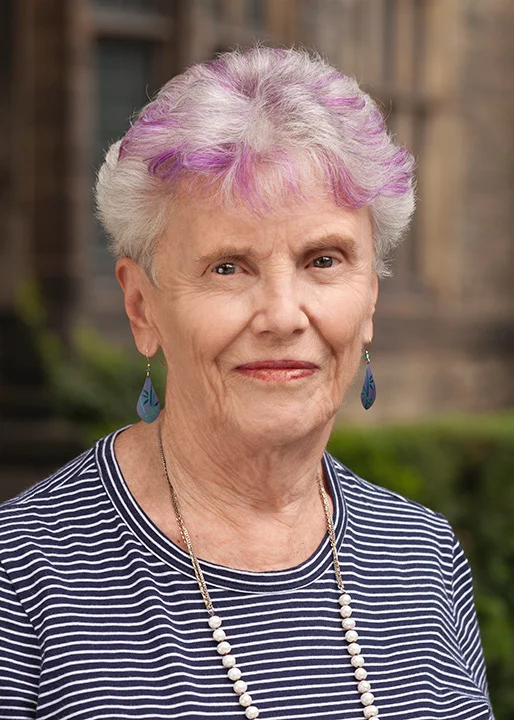
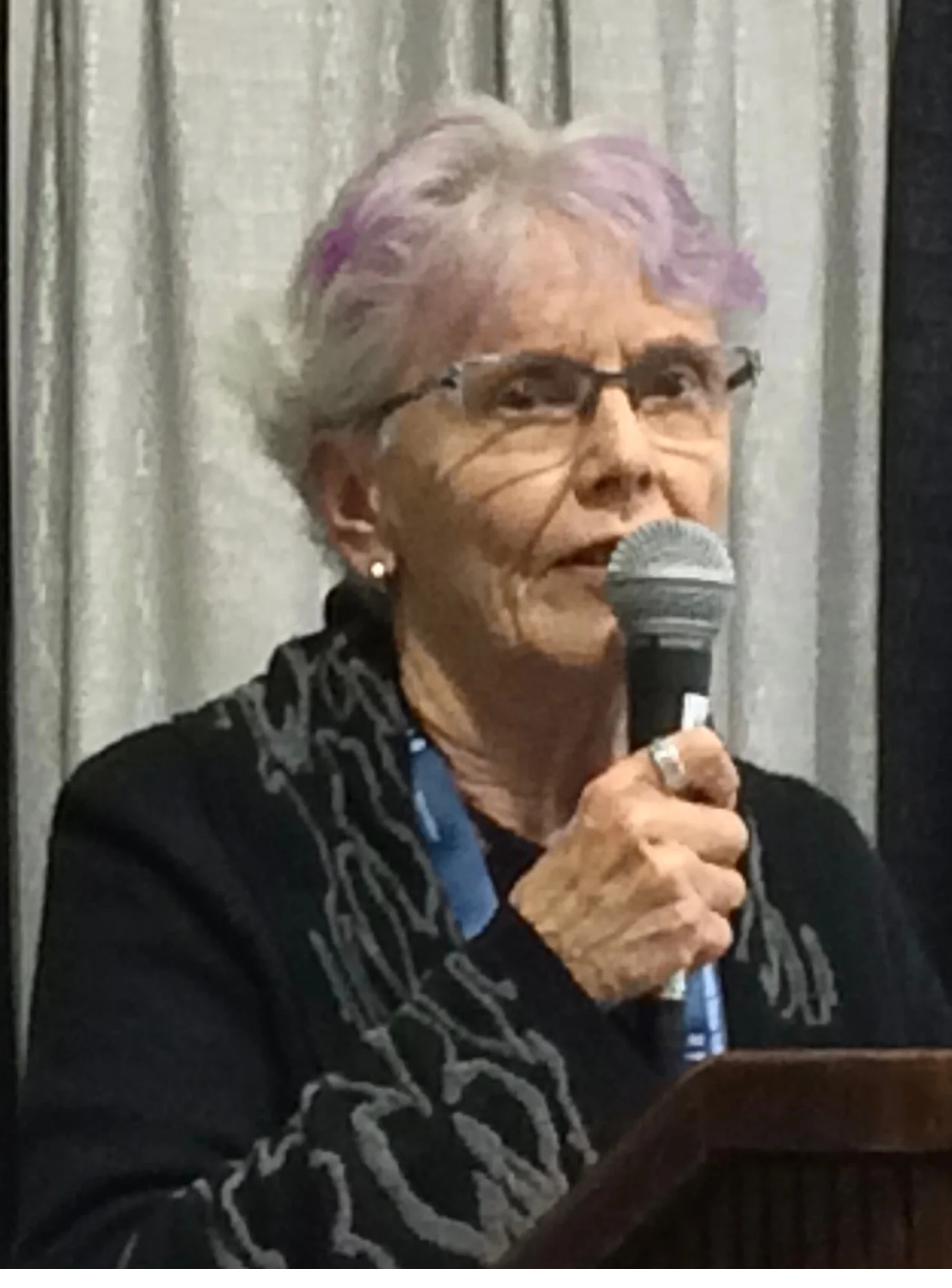
Born in the shadow of World War II, Mary Lou Dickinson came of age in an era that expected women to conform — but she never did. A feminist writer of the Silent Generation, she carved her own path as a single mother in the 1970s, juggling multiple jobs to support herself and her children. Her life changed when she found solidarity in the women's movement, drawing early inspiration from Betty Friedan and later working to support survivors of assault. Though she had long published stories in literary magazines, it wasn't until the age of 70 that her first book was published, proving that it's never too late to claim one's voice.
Reader reviews
★★★★★
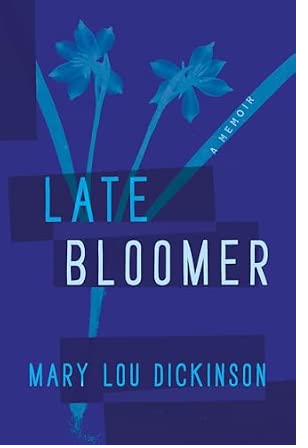
Mary Lou Dickinson's book Late Bloomer
Reviewed in Canada on August 13, 2026 · Format: Paperback · Verified Purchase
Late Bloomer is a wonderful autobiography taking the reader through the life of a courageous and highly gifted woman with a compelling passion for writing, adventure and relationships. The quality and clarity of Mary Lou's writing is superb, smooth sailing through complex situations with just the right amount of detail to have all these experiences come alive with vivid imagery. A memorable book and a great read!
— Shirley Spaxman
★★★★★
Never too Late to Bloom
Reviewed in Canada on July 11, 2026 · Format: Paperback
Late Bloomer is an autobiographical memoir that takes the reader through a specific period from World War II to the present. Dickinson's life spans an era where women's lives were planned, set, and ordained to follow a certain pattern. She did not follow the expected path nor accept the social norms entirely. Her peers and role models, her lived experiences describe an intelligent, thoughtful woman who followed her heart, her head, and her gut — a woman who met her challenges and rewards with a controlled yet indomitable will.
The one certainty in Dickinson's life is that she is a writer. As such, she is a keen observer and recorder of both her personal relationships, including a very interesting family, her travel experiences, and her community. As Dickinson turns the pages of her life, she also puts a spotlight on almost a century of the history of women's place in this time.
In Late Bloomer, Dickinson tells her story. It is an open, frank, honest telling that encourages each reader to find their own voice and to bloom in their own way. A very good read. Highly recommended.
— Paula de Ronde, Librarian, Author, Caregiver Advocate
★★★★★
Late Bloomer — a good read!
Reviewed in the United States on July 22, 2026 · Format: Paperback · Verified Purchase
A fascinating book, especially the descriptions of the author's early life in a frontier gold-mining town in Northern Quebec. Ms. Dickinson writes with an easy style, and is candid about many of the hardships she had to face before she got her first book published at age 70.
— Elizabeth Jochnick
Ile d'Or takes place shortly after the first referendum on Quebec separation. Four forty-somethings encounter each other in Ile d'Or, the town where all of them grew up. These intriguing characters are emerging from a frontier existence and moving into late twentieth-century society, and must discover how their contemporary lives connect with their pasts — and how those lives were shaped by growing up in a Northern Quebec mining town from the 1930s through the 1950s.
Press
Edward Brown, The Globe and Mail, September 14, 2010
"With a storytelling style that skilfully combines the fragility of the human condition with the rock-hard reality of life in a northern mining town, Dickinson threads together the lives not only of miners and their bosses, but also the larger social fabric of a Quebec mining town."
- "Old-fashioned (in a good way) Canadian story" — Editor Eric, Town Crier newspapers (Toronto), July 2010
- Featured in L'indice bohémien (Journal culturel de l'Abitibi-Témiscamingue) — Denis Cloutier, 2016
Reader reviews
★★★★☆ 4.3 out of 5 — based on Amazon customer ratings
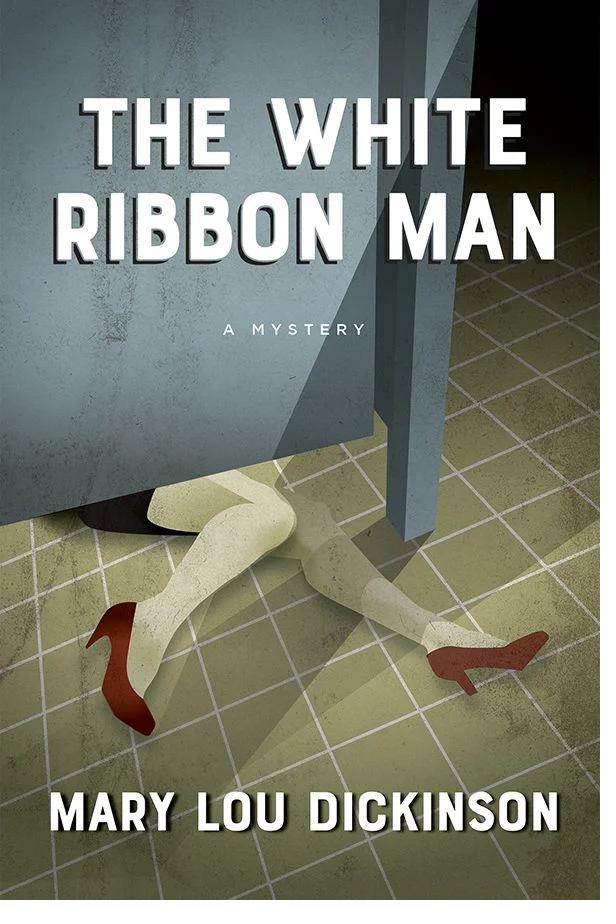
Mary Lou Dickinson's fourth book is a mystery set in Toronto, a city that has become one of the most diverse and interesting in the world. A woman who walks into a church to use the washroom sees a terrifying scene: legs sticking out of one of the stalls. There is no identification, just an empty purse. What happened to the dead woman? Who are the people in this church on a November Sunday morning, and how do they react? Read Dickinson's mystery to find out.
Brief synopsis: The White Ribbon Man is a murder mystery set in Toronto. A woman's body is found in the basement washroom of a downtown church — an Anglican church that welcomes homeless people for coffee and soup, with a congregation made up largely of social activists. During the investigation, the reader gets to know something about the minister, an unlikely suspect whose sleepwalking casts suspicion on him; a librarian who answered a classified ad placed by another suspect; a warden who is an activist against violence against women; and a parishioner who was the murdered woman's neighbour and friend.
Detective Jack Cosser, who leads the investigation, is a very appealing character, as are the caretaker and other members of the congregation. Since this is a congregation made up of many activists, the issues of racism and homophobia surface alongside the central mystery. The mystery aspect has just the right timing and complexity to keep one turning pages, and the gentle handling of its characters lets the reader see the humanity and vulnerability in each one, and the way they support one another as a community.
Available as an ebook for iTunes, Kobo and Kindle, and in some libraries. Or ask your favourite bookstore for a copy — if they don't have it, it can be ordered for you.
Press
Edward Brown is an author and freelance writer. His work appears in the Globe & Mail, Torstar, Spacing Magazine and other publications.
"Dickinson's approach falls closer to an old school Dashiell Hammett potboiler... The author's strength lies in fleshing out diverse characters who display the best, as well as the most deplorable, aspects of human nature."
Shoehorned in behind Toronto's Eaton Centre sits The Church of the Holy Trinity, AD 1847 — the fictional setting for Mary Lou Dickinson's murder mystery. The novel opens on a sunny autumn Sunday morning as regular congregants and strangers greet one another in the welcoming, inclusive spirit that defines Holy Trinity. Pleasantries are quickly dashed when a congregant discovers the body of Marni Atchison minutes before the service is to begin.
To solve the crime, Dickinson plugs into the veins of activism that course through the congregation. Parishioners may be alarmed, but they refuse to cower — with the assistance of kindly homicide detective Jack Cosser and his partner Steve Reid, sleuthing members set out to solve the murder. Unlike authors who revel in gory violence, Dickinson turns the genre's stock characters on their head: Cosser would rather have chamomile tea than black coffee, and Father David, the collarless, blue-jean-wearing priest, is self-absorbed, insecure, and a sleepwalker struggling to fill gaps in his own memory.
In the end, The White Ribbon Man provides a sobering parable on the destructive nature of shame in those obsessed with hiding past deeds, and the blinding influence of hypocrisy.
Reader reviews
★★★★☆
Murder mystery set in Church of the Holy Trinity's vibrant community
Reviewed in Canada on April 21, 2019 · Format: Paperback
Mary Lou Dickinson's mystery The White Ribbon Man describes the vibrant activist community at Church of the Holy Trinity near the Eaton Centre in downtown Toronto. HT is actively inclusive and social justice oriented, and Dickinson's description of the ways in which this community exerts a positive force in the lives of its diverse parishioners is wonderfully drawn.
Dickinson is an astute observer of human behavior, of how we make choices based on our past, sometimes for better and sometimes…not so much. There is a murder at the church and we follow the investigating detective, Sergeant Jack Cossar, as he interviews various parishioners including a sleepwalking minister and Rosemary, a librarian, who is a closet writer. Blocked for years, she finds enough inspiration in the murder to attempt her first book length work. Rosemary and Jack get to know each other in conversations about the murder — she looking at it from a creative writer's perspective, he from the viewpoint of police work. We see how their minds work in different ways, each shedding light on a complex situation from a new angle. Over time they learn to trust each other, and we are left hoping something more may ensue. Great read.
— Ursula Pflug
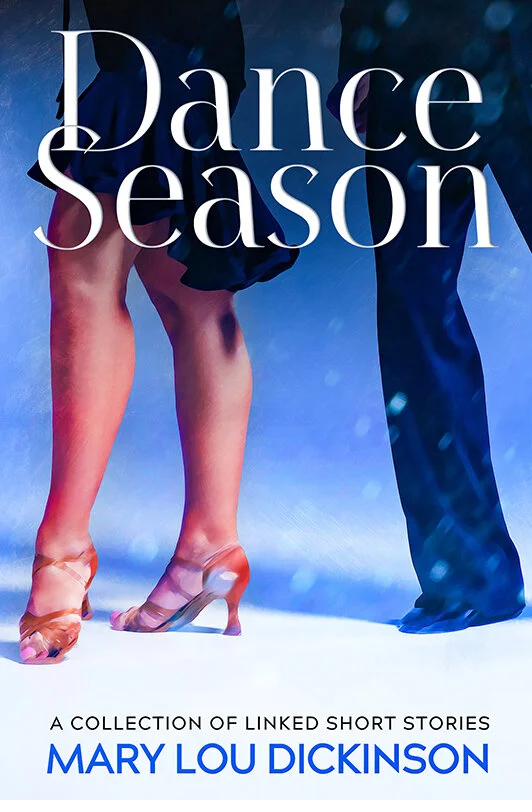
She thinks she might meet Prince Charming in dance classes. One sixty-year-old divorcee is about to find out the odds on love. In Dance Season, a collection of twenty linked stories, Laurie goes to classes to learn new dance steps — and is also hopeful she will meet someone there.
Her passion for dancing doesn't waver in the face of challenges she encounters. Dave's humour amuses her, but not so his quick temper. Jason, a graceful dancer, doesn't know what he wants — will he figure it out? Laurie dances through adventures and misadventures. Quick, quick, slow. Tango rhythm. She becomes an adept dancer: rhumba, cha cha, waltz. She gains wisdom and insight. Does she also find love?
Available as an ebook or print paperback.
Reader reviews
★★★★☆
Heartfelt Stories
Reviewed in the United States on February 15, 2021 · Format: Paperback
In Mary Lou Dickinson's fifth book, Dance Season, she offers her readers a connected series of very interesting and poignant short stories. They are stories of love's comfort and joy as well as its misunderstandings and sadness. Dancing plays an important role throughout, although there is much more offered in terms of relationships — lovers, family, and friends — and how we navigate through smooth and rough times. Recommended reading.
— Shirley Spaxman
★★★★★
A great read and well written.
Reviewed in the United States on January 31, 2021 · Format: Kindle
Dance Season is definitely a book for women — who hasn't had a relationship with a "Dave" with regrets, and I identified with Laurie's anger, hurt and loss after Jason. I felt I got to know her as a woman searching for love, identity and all those things that mean so much as we go through life.
— Jean Ellen
★★★★★
Highly recommended.
Reviewed in Canada on August 3, 2022 · Format: Kindle · Verified Purchase
This beautifully written Canadian novel expresses the challenges faced by a youthful sixty-year-old grandmother who seeks to reestablish a loving relationship. It isn't a perspective that one often reads about, and it showcases a different awareness of joy and heartbreak. The author's descriptions are evocative and add texture to her writing. I enjoyed the reflections and wisdom expressed by the protagonist. While the thread of the narrative revolves around her happy participation in dance classes, it is also a metaphor that reflects living life to the full. I found the book engrossing as I followed the journey of the protagonist. I highly recommend this novel.
— Henry Blumberg
An eclectic collection of short stories. The characters meet their challenges — loneliness, abuse, even death — with insight, grace and often humour. The strength of their stories lies in the author's insight into the human condition.
Press
Notable mentions
- "Ordinary Lives Examined" — Lee Baxter, Canadian Literature, December 2011
- Reviewed by Lee Gold
- Reviewed in the Globe and Mail by Jim Bartley, July 14, 2007
Reader reviews
★★★★☆
Promising debut
Reviewed in the United States on June 18, 2007 · Format: Paperback
This collection from Mary Lou Dickinson incorporates both recent work and some that was published as many as 30 years ago. Especially worthwhile are "A Country Weekend" and "Hello Angel." The author is concerned with social issues and the stories often relate to these concerns. Some of the stories are as a consequence overly didactic. Still, the collection shows promise and offers many worthwhile moments.
— Gordon Neufeld
★★★★★
One Day It Happens
Reviewed in the United States on August 7, 2011 · Format: Paperback
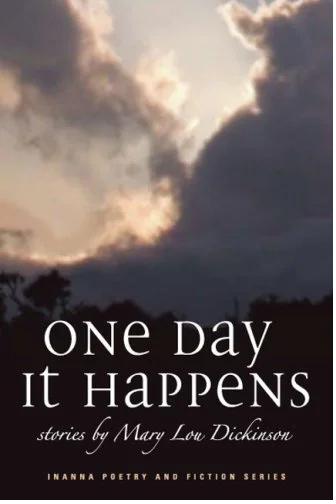
One Day It Happens, a short story collection by Mary Lou Dickinson, is wonderful. They are stories of different people, women and men, young and old. The love of Dick and Tony in "The Neighbors" is poignant — the death made me tearing. "The Empty Chair" has a humorous tone: when I read the line about him shuffling across the room with one pant leg on and the other off, "like her son when he was a boy," I seemed to see a lopsided smile on the face of the protagonist, Margaret. "Hannah's Drawings" tells a story about death and friendship, music and drawings. The peaceful tone reminds me of a line by the Indian poet Tagore: "Let life be beautiful like summer flowers and death like autumn leaves."
— Zoë S. Roy
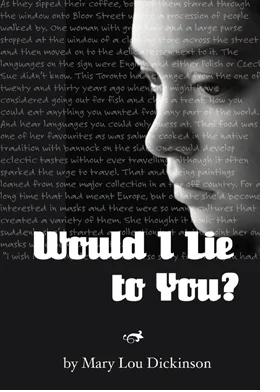
Would I Lie to You? is a novel about secrets — the kind that even loving couples have been known to keep from each other. After ten years of marriage, Sue and Jerry each harbour a significant secret: the son their protagonist didn't know her husband had, and the baby she had when she was sixteen and never saw.
When Jerry becomes ill and it's apparent he's dying, Sue visits a psychic, Hans, who tells her there is someone like a son in her life. She dismisses this, but at Jerry's funeral his son turns up. At first Sue feels betrayed by Jerry, but gradually accepts her own complicity. The novel explores the reality of family secrets — huge issues kept quiet under the veneer of polite society that affect individuals and families for lifetimes, even generations — and raises the question of who is family, and how we create one.
Available as an ebook for iTunes, Kobo, Kindle, and in some libraries.
No reviews on file for this title yet.